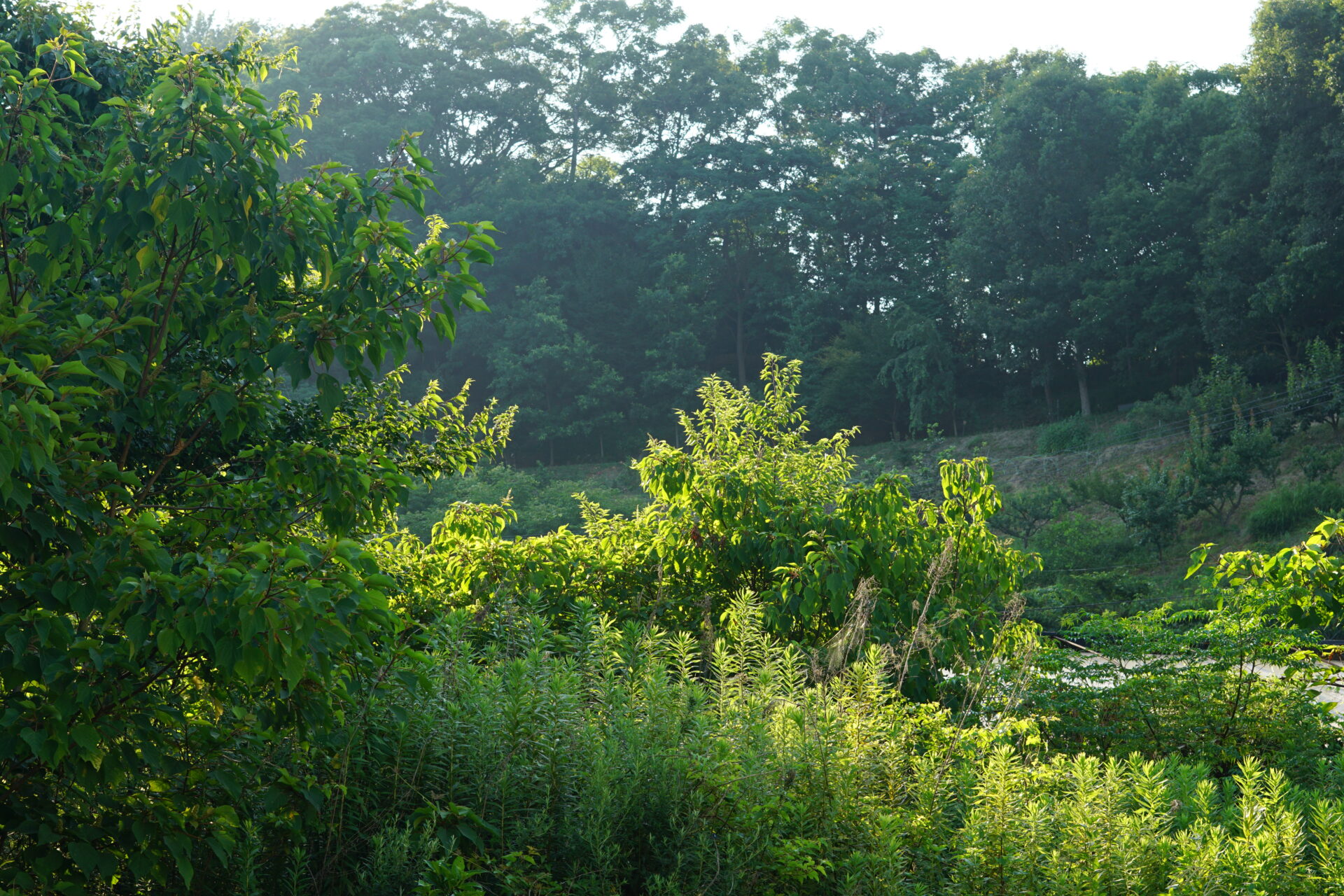
猛暑とか言ってた日はもう過去のこと、今はニュースに酷暑という目新しい言葉が連日並んでいる。大抵の暑さでは夜は気温が下がるこの江田島も、さすがに夜まで蒸し暑い。私はこの季節はシャワーでお湯を使わない。これがまた気持ちいい。水のシャワーで寒くならない、この幸せもたまらない。暑くて熱中症や夏バテのリスクも高く体調管理に気をつけないといけないが、やっぱりカラッと晴れた日が好きなんだなとしみじみ感じる。
遊び稽古
1体操
2杖に慣れる
3 25の杖(多田先生)
本稽古
1合気体操
2足さばき
3受け身
4二教ストレッチ
5相半身片手取り二教
6相半身片手取り入身投げ
7相半身片手取り一教表
8相半身片手取り四方投げ裏
9横面打ち二教表
10多人数取り逆半身片手取り呼吸投げ
先週に引き続き二教を溶かす練習をした。溶かすと言ってもそれをどうするのかは表現するのはとても難しい。受けの動作の中にたくさん含まれている動作の一つと言ってもいいが、なぜその動作をするのかそれを知っていくことも合気道の大切な練習だ。取りが技を練習するだけではない、同じだけ受けが受けの取り方を表現することで何を体現しようとしているのかが変わってくる。合気道をどう体現するか、それはとても面白い。
The days when people spoke of intense heat already seem to belong to the past. Now the news is filled with a newer word: extreme heat, repeated day after day. Even here in Etajima, where temperatures usually cool down once the sun sets, the nights have remained oppressively warm and humid.
During this season, I do not use hot water when I shower. A cold shower feels wonderful. There is a simple pleasure in being able to stand under cool water without feeling cold afterward. It is one of those small seasonal joys that I never tire of.
Of course, the heat brings real concerns. Heatstroke and summer fatigue are constant risks, and it is important to take care of one’s health. Even so, I find myself appreciating clear blue skies more than ever. Despite the discomfort, there is something about a bright summer day that I simply love.
Play practice
- Warm-up exercises
- Becoming familiar with the jo
- The 25 Jo Movements (Tada Sensei)
Main practice
- Aiki warm-up exercises
- Footwork
- Ukemi (breakfalls)
- Nikyo stretch
- Ai-hanmi katate-dori nikyo
- Ai-hanmi katate-dori irimi-nage
- Ai-hanmi katate-dori ikkyo omote
- Ai-hanmi katate-dori shiho-nage ura
- Yokomen-uchi nikyo omote
- Multiple-attacker gyaku-hanmi katate-dori kokyu-nage
Continuing from last week, we practiced dissolving within nikyo. Even when using the word “dissolve,” it is very difficult to explain exactly what that means. In many ways, it is one of the subtle qualities embedded within the movements of the uke. Yet understanding why those movements are performed is itself an important part of Aikido training.
Aikido is not simply about the nage practicing techniques. The uke is practicing as well. The way the uke receives, responds, and expresses the technique changes what is being embodied through the practice. Two people may perform the same technique, yet express something entirely different through it.
This raises a fascinating question: What is it that we are trying to embody through Aikido?
The answer is not fixed. It reveals itself gradually through practice, through the relationship between nage and uke, and through the countless repetitions that shape both. Exploring how Aikido can be embodied—not merely performed—is one of the aspects of the art that I find most intriguing. It is a study that extends far beyond technique and continues to deepen with every training session.
コメント