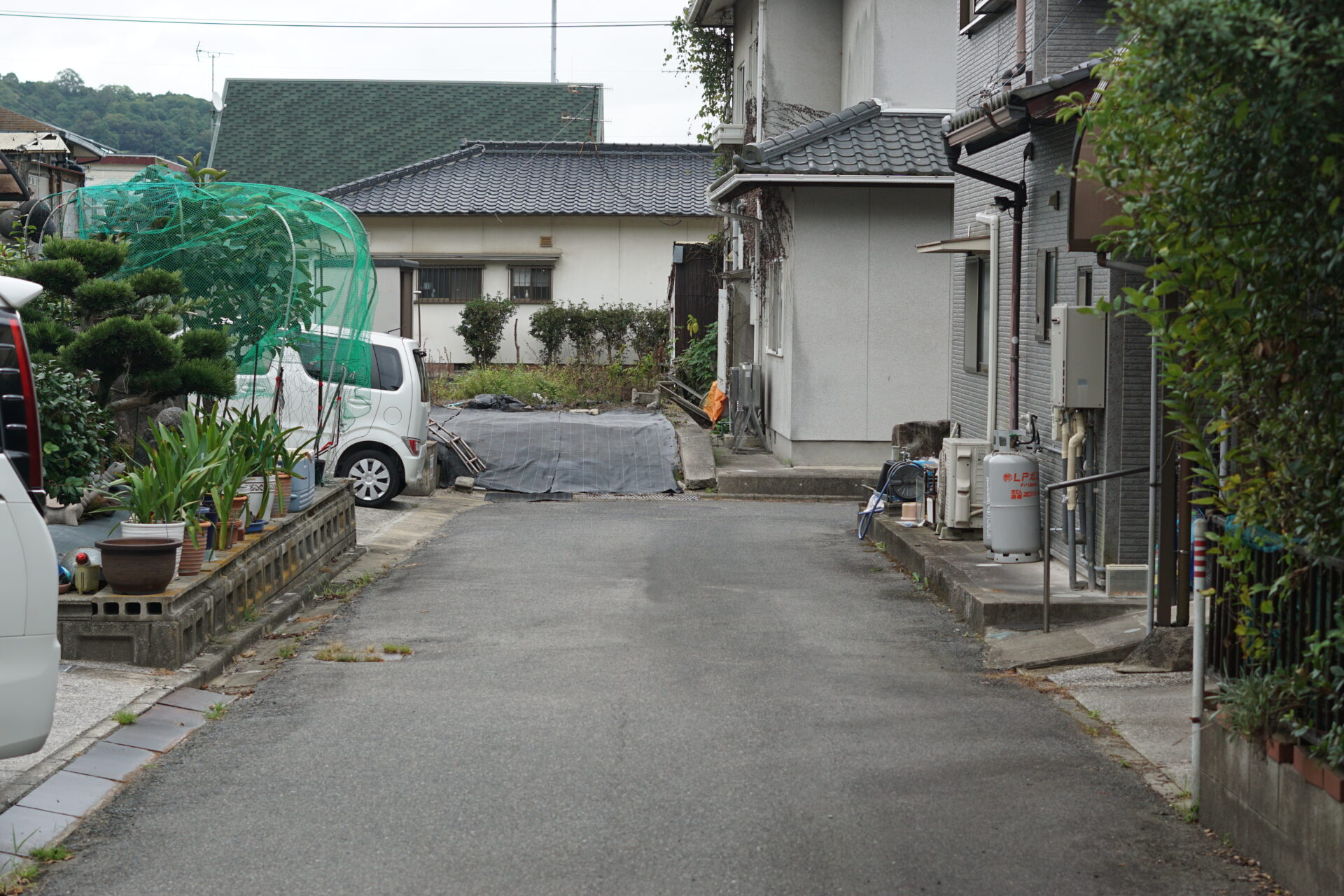
一枚の写真に何が写っているか、なんと答えるかは見る人にとってさまざまだ。何も知らない人からすれば何も写っていないと捉えるかもしれないし、文化や時代に詳しい人からすれば、写っている建物や地形から何かを見出すかもしれない。天気や生物に詳しい人からすれば写る空や木々から気圧や季節をかんじとり、構図に詳しい方は作者の意図を感じ取り、撮影者側を見透かすのかもしれない。それは一つの窓だ。私がとった今日の写真は、いつも通り私の家の前。その写真に私が見出すのは、いつもの慣れた練習場所の風景だ。どこでも私は家の前で練習し始めるので、ご近所さんはいつも物珍しいく感じられる。経験上物珍しがられているうちはまだまだリラックスできない。またやってるな、ほらやっている、あれ?今日はやらないのかな、と思われるくらいになって、初めて自分に馴染んでくる。馴染んだ練習場は最高の練習場だ。つまりその写真に写っているのは、最高の練習場の風景だ。
遊び稽古
1体操
2杖になれる
3 25の杖
4 相半身片手取り一教裏(杖の手引き)
本稽古
1合気体操
2足捌き
3受け身
4三教ストレッチ
5相半身片手取り三教呼吸投げ
6横面打ち四方投げ表
7横面打ち四方投げ裏
8横面打ち内回転投げ裏
9多人数取り相半身片手取り呼吸投げ裏
稽古への参加を促すのは難しい。稽古に来なくてもいいのか、来ないといけないのかというと、来なくていい。来なくて困らない。つまりそういうことだ。われわれはやらないと困ることで人生を埋めてしまう。そういうことで人生を埋める内に、やらないといけないのかやらないで困らないのかで行動原理を決めてしまう。そうすると人生は色を失う、と私は思う。人生はやらないといけないことで埋めるべきではなく、やりたいことで埋めるべきだ。そしてやりたいことは、やりたい時だけやりたいではなく、自分との約束なんだ。やりたくないと思っても、一度やりたいと思ったことは、一旦はやりたいでなくなっても、続けてみるべきなんだ。これはまずまず難しいことなんだ。そうしなくても困らないから。
What a photograph contains depends entirely on the person looking at it.
Someone with no particular knowledge might see nothing of interest at all. Someone familiar with history, culture, or geography may notice clues hidden in the buildings or landscape. A person knowledgeable about weather or nature may sense the season or atmospheric conditions from the sky and trees. Someone trained in composition may perceive the photographer’s intentions and perhaps even glimpse something about the person behind the camera.
A photograph is a window.
The photograph I took today shows the view in front of my house, as it always does.
What I see in it is the landscape of a familiar place of practice.
No matter where I live, I eventually begin training in front of my house. To my neighbors, it probably seems unusual at first.
From experience, I know that as long as people find it unusual, I am not yet completely relaxed there.
Only when it becomes:
“There he is practicing again.”
“Look, he’s out there as usual.”
“Hmm… I wonder why he’s not practicing today?”
—only then does the place truly become part of me.
A training ground that has become familiar is the finest training ground of all.
So what is captured in that photograph?
The scenery of the best training ground imaginable.
Play Practice
- Exercises
- Becoming familiar with the jo (wooden staff)
- The 25 Jo Kata
- Ai-hanmi Katate-dori Ikkyo Ura (guided with the jo)
Main Practice
- Aiki exercises
- Footwork
- Ukemi (falling techniques)
- Sankyo Stretch
- Ai-hanmi Katate-dori Sankyo Kokyu-nage
- Yokomen-uchi Shiho-nage Omote
- Yokomen-uchi Shiho-nage Ura
- Yokomen-uchi Uchi Kaiten-nage Ura
- Multiple-attacker practice: Ai-hanmi Katate-dori Kokyu-nage Ura
Encouraging people to come to practice is not easy.
Do people have to come?
No.
Nothing terrible happens if they do not.
And that is precisely the challenge.
We tend to fill our lives with things we must do—things that will cause problems if left undone. Before long, our decisions become based entirely on a simple calculation:
Do I have to do it, or can I get away without doing it?
When that becomes our guiding principle, I believe life gradually loses its color.
Life should not be filled only with obligations.
It should also be filled with things we genuinely want to do.
And wanting to do something does not mean doing it only when the mood strikes.
A true desire becomes a promise to oneself.
Even when the initial excitement fades, even when there are days when we do not feel like doing it, something that once mattered to us deserves to be continued for a while longer.
That is not easy.
After all, nothing bad happens if we stop.
And perhaps that is exactly why it is worth continuing.
コメント