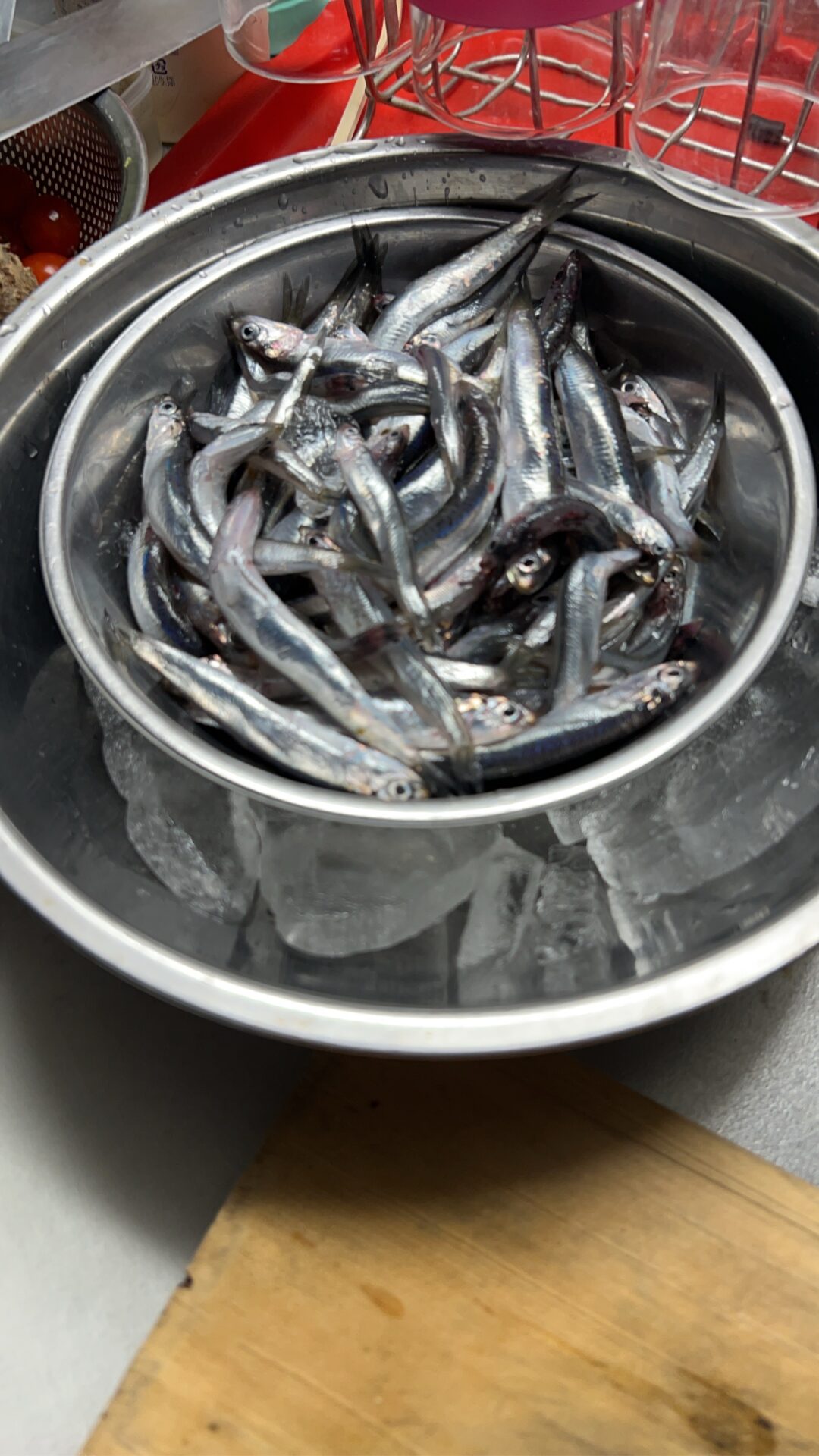
この島に来るまでイワシは嫌いな魚だった。生まれが愛媛県の八幡浜という漁師町の母は刺身を食べない人だ。その母がイワシの刺身を前に食べる気になったのはこの島に来てからだ。鮮度が違うと輝きが違う、透明感が違う。臭みなんて無縁の生命感だ。青魚がなぜ青くないのに青魚か、新鮮なイワシは青く光っている。現地の人や、古来の人からしたら当然のことが、たくさん失われているのだろう。自然のそばで生活すると極々当然のことに感動し、生命の原点を見る。
遊び稽古
1体操
2熊歩き、蜘蛛歩き
3膝行
4 25の杖
本稽古
1合気体操
2足捌き
3受け身
4逆半身片手取り舟漕ぎ呼吸投げ
5正面打ち二教表裏
6正面打ち天地投げ
7正面打ち三教表裏
8正面打ち四方投げ
9正面打ち四教表
合気道の動きは古武道や武士の動きが元になっている動きが多い。しかしそれを体得するのにくろうするのだ。我々日本人なら当時は当然の動きなのかもしれない。文明も進化して、必要がなくなったのかもしれない。しかし忘れている原点に帰ることが大切だと思うことはよくあることだ。合気道もその一つだ。
Until I came to this island, sardines were a fish I disliked. My mother, who was born and raised in Yawatahama, Ehime Prefecture—a fishing town—does not eat sashimi. Even she only came to enjoy sardine sashimi after coming to this island. When the freshness is different, the shine is different, and the clarity is different. There is no fishy smell at all—only a strong sense of life. Blue-backed fish are called “blue fish” even though their flesh is not blue, but truly fresh sardines actually shine with a blue glow. What feels natural and obvious to local people or to people in ancient times has probably been lost in many ways. Living close to nature makes you deeply moved by things that should be completely ordinary, and you come face to face with the origin of life.
Playful practice
- Warm-up exercises
- Bear walk, spider walk
- Shikko (knee walking)
- 25 jo suburi
Regular practice
- Aiki exercises
- Footwork
- Ukemi
- Gyaku-hanmi katate-dori funakogi kokyu-nage
- Shomen-uchi nikyo, omote and ura
- Shomen-uchi tenchi-nage
- Shomen-uchi sankyo, omote and ura
- Shomen-uchi shiho-nage
- Shomen-uchi yonkyo, omote
Many movements in Aikido are based on techniques from classical martial arts and the movements of samurai. However, it takes effort to truly embody them. For Japanese people of that time, these movements may have been completely natural. As civilization has advanced, they may simply no longer be necessary. Still, there are many moments when I feel it is important to return to origins that have been forgotten. Aikido is one of those paths.
コメント